
The Vanishing Forest
Some things, simply, look too big, too plentiful to ever be used up. The herds of bison that clouded the American plains; the trees of Easter Island; the ice sheets of the Arctic; the world’s great rainforests…
But a trip up the Batang Rejang, the Amazon of Borneo, which runs from its estuary on the South China Sea through hundreds of miles of ancient forests, is not only one of the world’s last great river journeys, but an insight into deforestation in action.
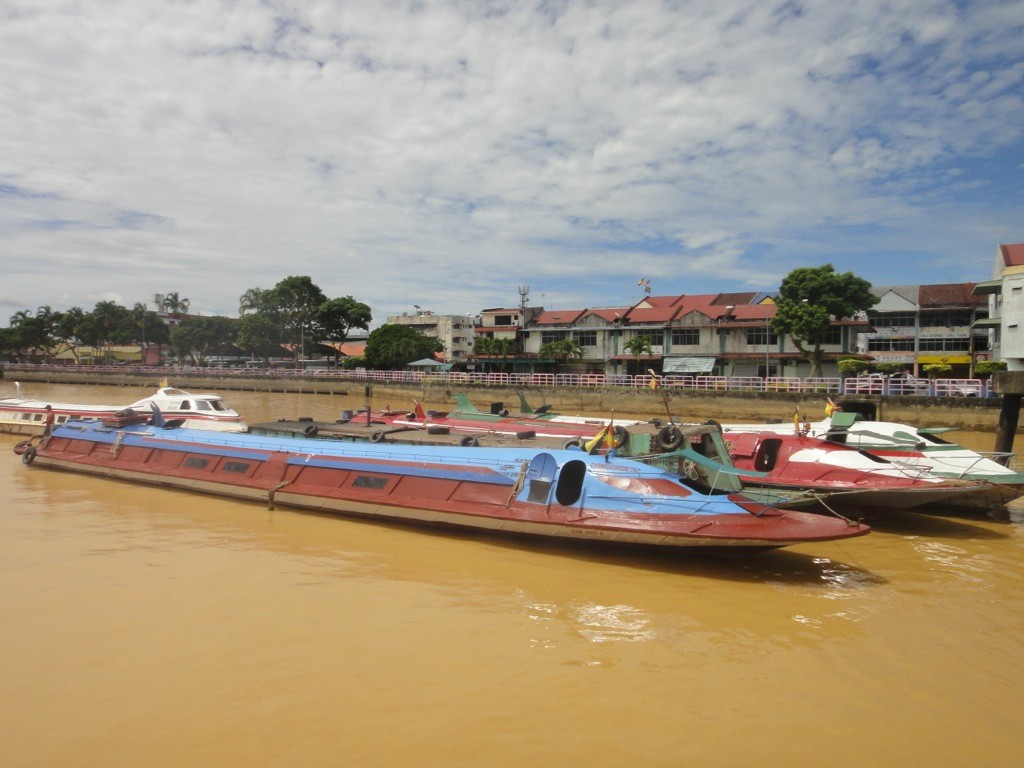
Sturdy, double-decker express boats take you from Kuching, the capital of Sarawak, across the sea and through the estuary archipelago to the industrial city of Sibu.
From there, long, low steel express boats run upriver to Kanowit, Song, Kapit, Belaga, fighting the current of the swollen stream, ploughing their way through clusters of logs, and stopping at a myriad logging camps, settlements and longhouses in between.
The best way to see the river? From the roof of the boat.
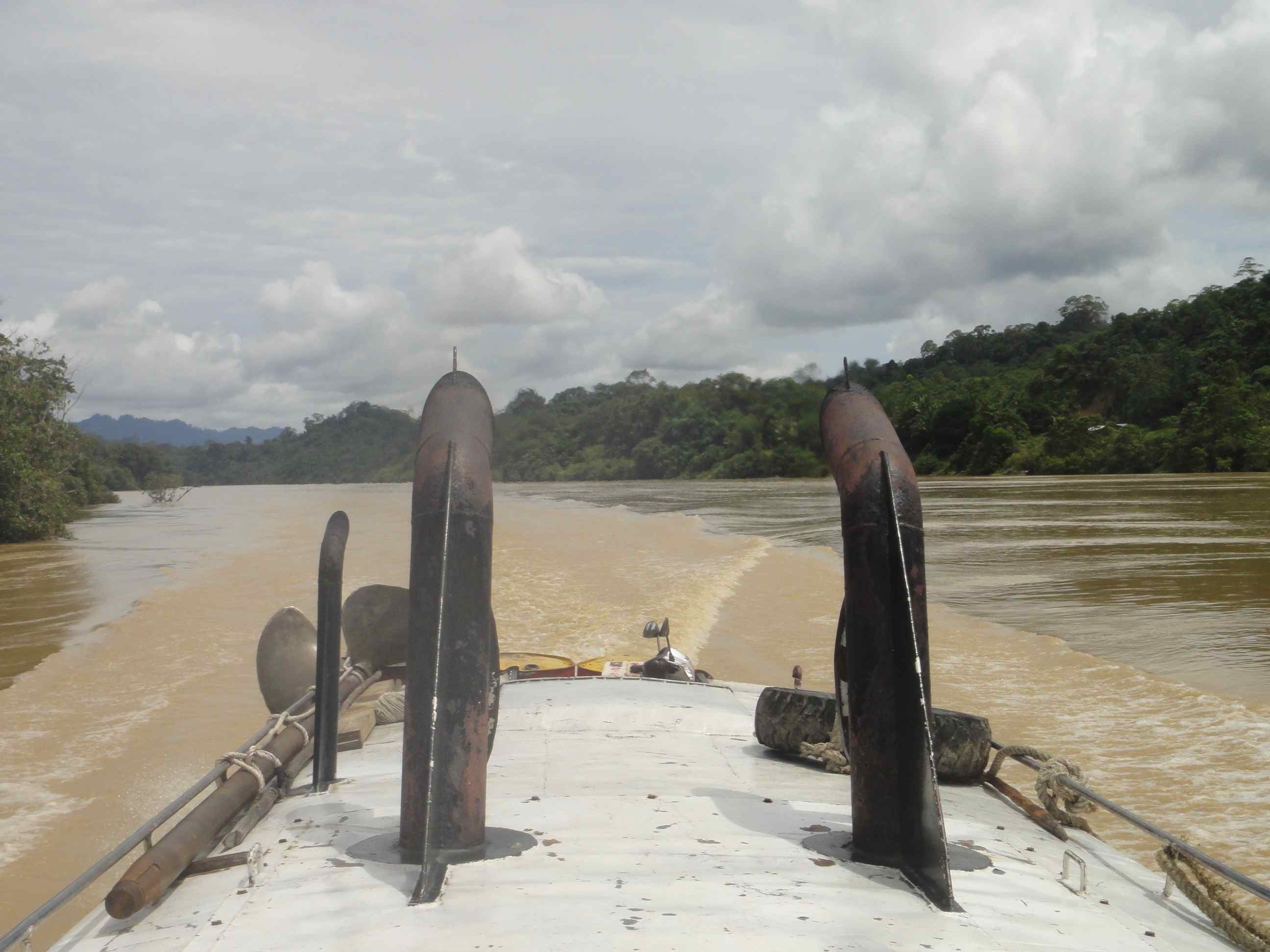
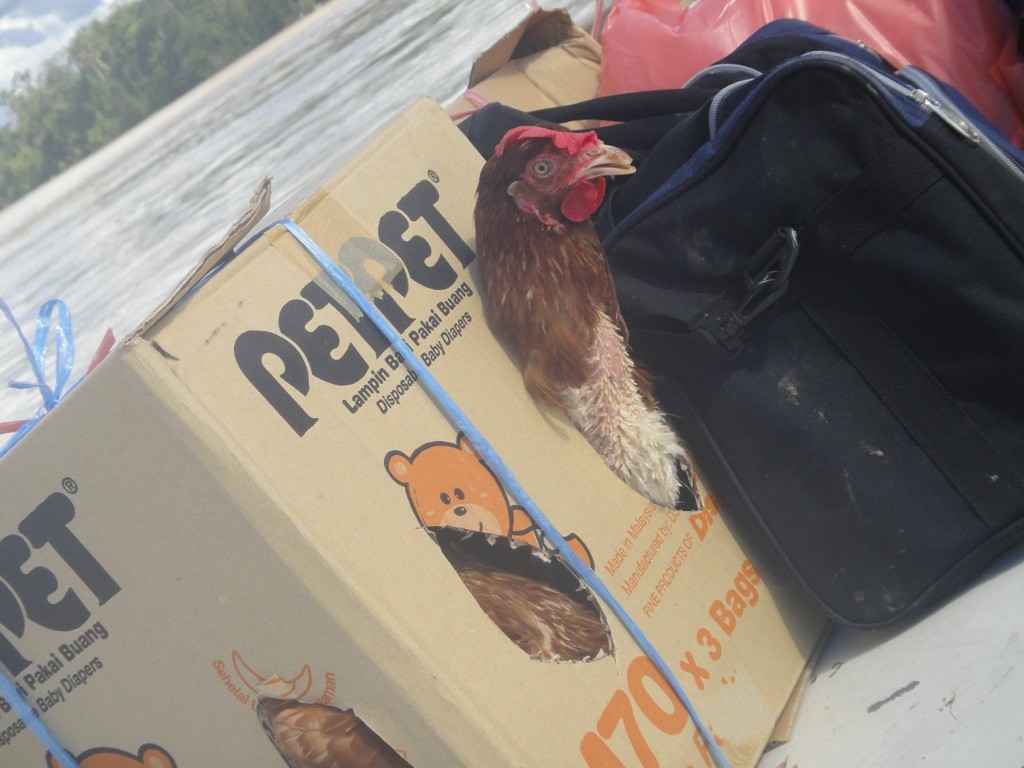
There you’ll have everything from floor tiles for a bungalow to a new seat for a logging camp manager’s 4×4 to boxes full of live chickens for company. They’re picked up, or dropped off, during 30-second pauses at tiny jetties which peek out from the banks.
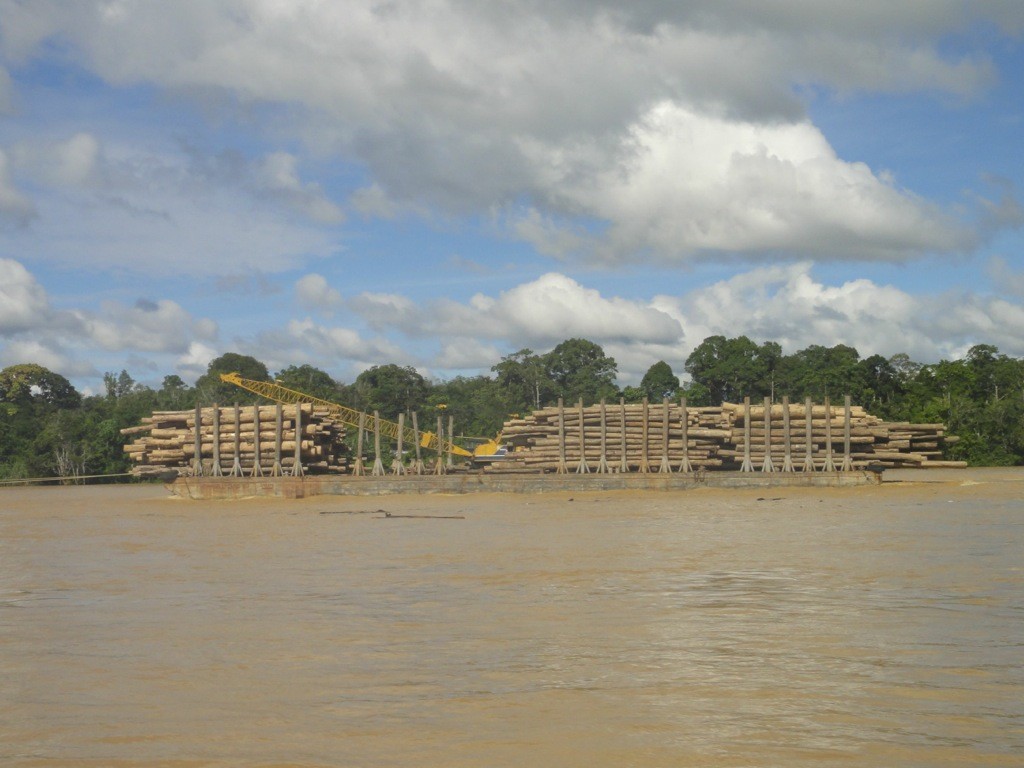
Heading out of Sibu terminal, with its optimistic sign boasting of clean, safe rivers, the Rejang is a lurid mustard. Logging plants clog the banks.
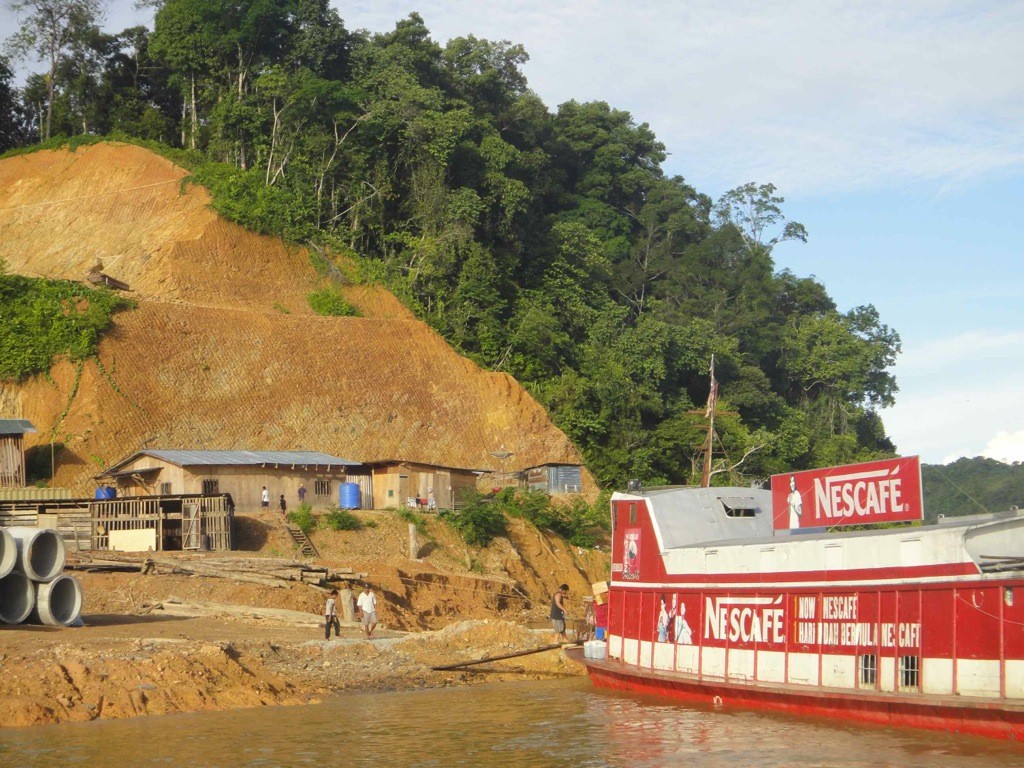
Further upriver, you see the logging camps, timber settlements perched on bright orange soil, naked to the rains, logging tracks carved out of the scarred hillside, taking lorries deep into the interior. And the source of the river’s turbid colour is all too obvious.
High-powered tugs ferry huge, crane-carrying platforms stacked high with timber downstream, and plough up again, empty, against the current to reload.
These low palms which cluster the bank, clumps of juicy berries squat at their heads? Oil palms. They mature in three years. Can be harvested all year round. Now make bio-diesel, fuel for cars.
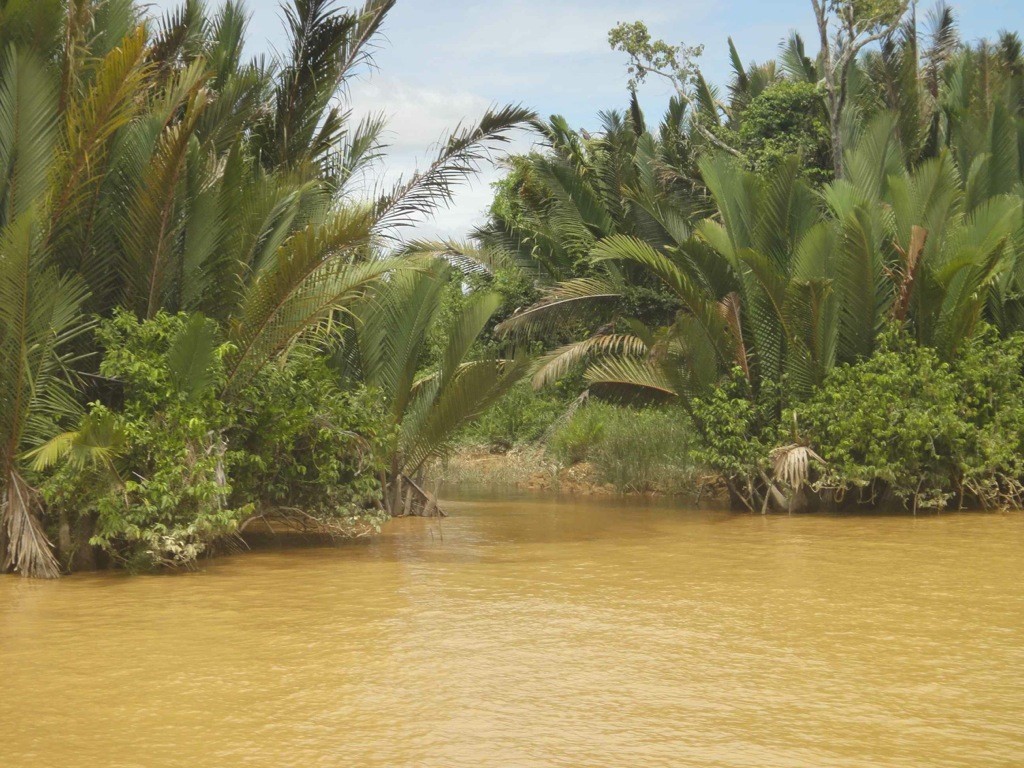
And it’s these that the logging companies are using to replace the centuries-old trees they’re carving out of the hilltops. The longhouse communities are into the game too, many of their paddy fields now replaced with oil plantations.
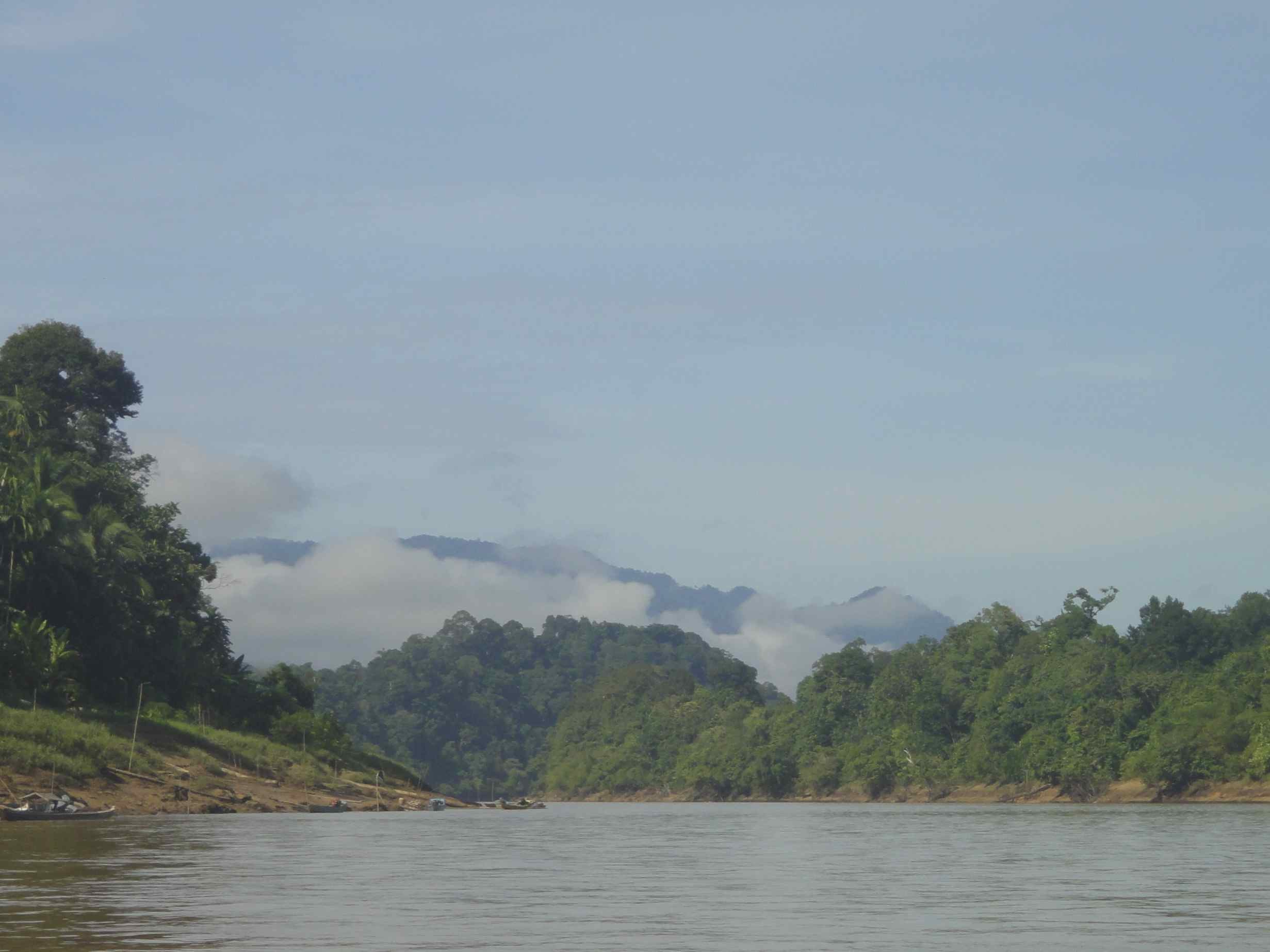
The Balui River, a tributary of the Batang Rejang, leads further into the interior from Belaga, a community of 2500-odd souls plus a myriad fighting cocks, where the express boats terminate their two-day journey, some way after the Pelagus Rapids turn the water to latte foam.
It looks, at first sight, untouched. Yet at the Kejaman and Lanahan longhouses we visit, almost everyone is out in the fields planting oil palms. And most of the men who work outside the community are based in the logging camps.
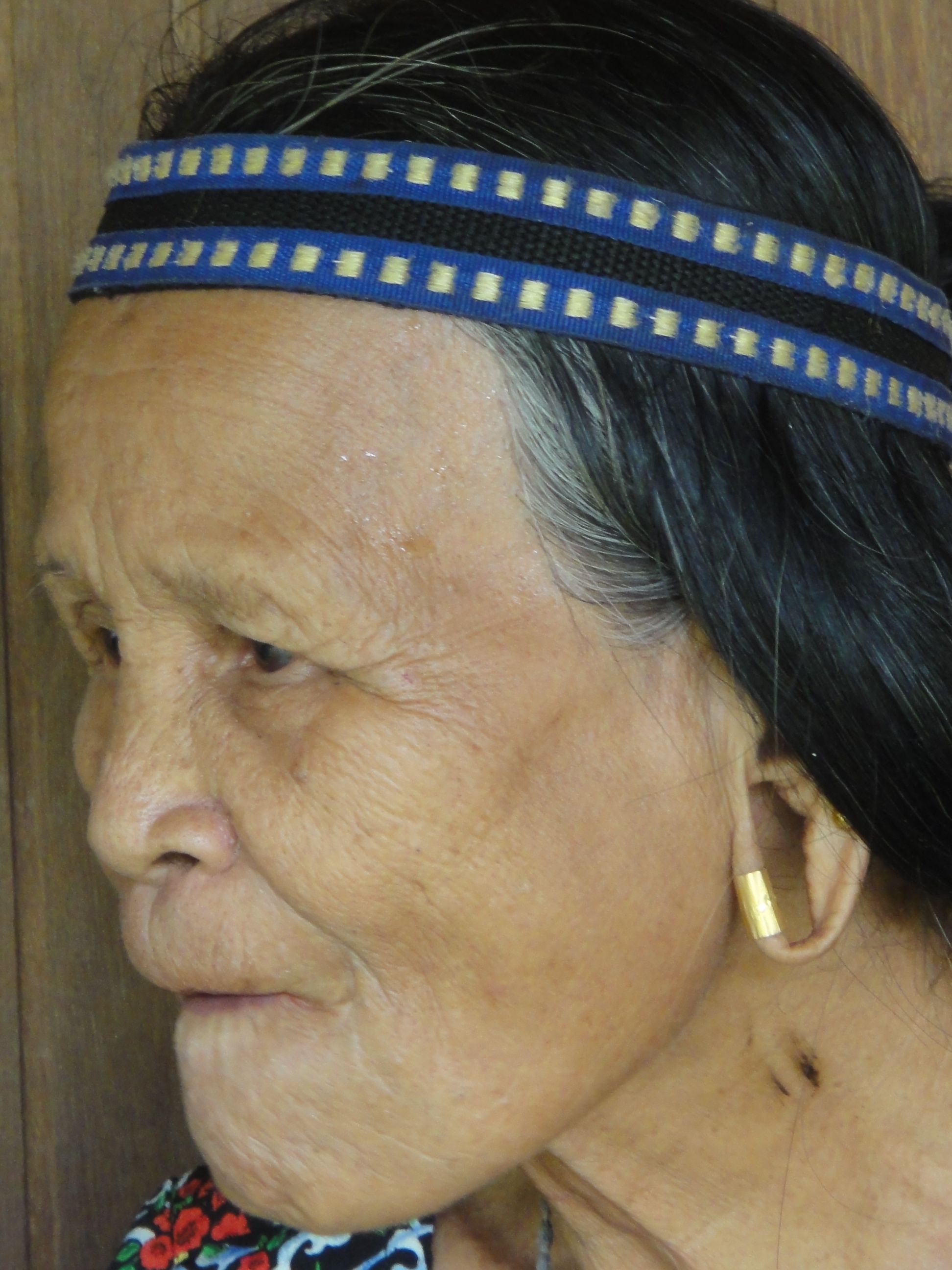
Most of the people we meet are under six, over sixty, or mothers looking after their children. Like this elderly Lanahan lady, chewing betel between her toothless gums, wearing gold around her lobes, native batik, woven head-dress and her forearms blue with tattoos, just as her own grandmother might have done.
Yet, the strange thing is, the jungle is so vast that all this activity barely seems to touch it. Fifteen minutes or so up the Belaga River we follow a stream through pristine forest to a waterfall where twin streams of crystal water pour down sheer, cross-hatched rock into a cool green pool.

I’m reminded, oddly, of a poster I saw in a bar named Soho (of all things!) in Kuching, the state capital, quoting the Cree Indian prophecy.
“Only after the last tree has been cut down
Only after the last fish has been caught
Only after the last river has been poisoned
Only then will you find that money cannot be eaten.”
*Do It Yourself
Express boats run from Pending jetty, outside Kuching, to Sibu, every morning at 9am. Be there by 8.30 to buy tickets. Connecting boats run from Sibu to Kapit’s main jetty at 1.30 and 2.30. To progress beyond Kapit, foreigners need permits, available free from the resident’s office out of town (take a yellow minibus from the market), although these are not always checked. Boats originating in Sibu leave Kapit for Belaga from the left-hand jetty at 9.10 each morning. Be there early.
From Belaga, we explored upriver with Asun, who is based out of Worldwide Exploration B&B on the main strip. We paid 400 ringgit ($130/£80) for a custom-made two-day, one-night river trip for three people, visiting three different longhouse communities, staying the night in one, and taking a trip to the waterfall.
incredible. so beautifully written, and illustrated. we’re all doing it, in one form or another. is it more noticeable here? the damage, and lack of ways to fix it.
I think much more noticeable than, say, in the UK, where we’d killed all our forests before the Industrial Revolution (we had to import timber at one point during the 17th century): precisely because the forest was, until so recently, so impenetrable and pristine…
This is an amazing story… I had never heard of oil palms and the vast amount of logging going on in Borneo. Thank you for an enlightening journey… even if it is one of concern for the forest. Terrill
what’s the travel time by boat from kuching to sibu?
Four hours, give or take. Much, much faster than the bus.
Yeah! You are on FP! (again?)
Yeah. That’s a triple, or summat. Got back from the wilds of Similajau to unprecedented numbers of comments… You can do it too, Madame…
This was very interesting and a bit depressing… 🙁
http://www.wutevs.wordpress.com
Enlightening and depressing.
Your descriptions are so vivid that it feels like I’m in Borneo right now. Are any efforts being made to stop the deforestation?
Not really… The lead headline on the business section of the Borneo Post (one of two local papers) the other day was: Sarawak Forestry generates 2.5billion RM [about $800,000) in four months. And the minister for Green issues is drowning a chunk of the forest with a big old hydro-dam…
Amazing story, the photos really enhance it too. So sad to see forests disappearing at such a rapid rate 🙁
http://www.denwrites.com
an informative post. it fans my flame to continue living simply with awareness of where food, resources, etc. come from(and go to) as well as what money buys and/or destroys. thank you, ~heather
Wow. Pretty cool! Nice read!
What an interesting corner of the world you stumbled across. I particularly enjoyed your photo of a local senior citizen. We seniors don’t get nearly enough press coverage in the media.
The Codger
http://thecodger.wordpress.com/
Wow, great photos and quite an interesting story. I think I would like to go there too…I would like to meet that last woman…she looks wise. I’ve heard that Cree Quote its great, so sad about the deforestation, when will we learn…
evelyngarone.com
Great Pictures, and Well Written!
-Noor
http://noor724.wordpress.com/
🙂
I’m inspired to visit the Batang Rajang, simply to ride on one of those express boats! And, because from the pictures, the area looks absolutely amazing.
I was in Western Borneo before- Pontianak, Indoensia that is. And the forests were still thick by that time 1993.Now I know deforestation is a big problem we have to face.
I wrote about this as well
http://luludandunia.wordpress.com/2010/06/09/when-the-scary-forests-are-our-saviours/
Well.. inspiring one..I like it and appreciate so much..:)
How do you do it, your well-detailed travelling.. Great, great explorer. Congrats.
Beautiful and sad all at once. We were once at crossroads as a race. Stories like this make me wonder have we passed the point of no return.
Hey great write-up on your trip… I have taken your Cree Indian prophecy part to post on my blog as I found it quite touching… Sorry to steal that bit… Have a great day =)
Wow, nice photos you took… and yes it is quite sad to see deforestation going on at such a rapid rate. It took millions of years to get the forests the way they are now and we’re stripping them down in fraction of the time.
Hopefully we can learn to work in harmony with nature instead of against it.
http://www.thecooldown.wordpress.com
I saw much of the same in Laos and Guatemala. Really the only thing keeping the eastern side of Laos from being clear cut is the millions of kilos of unexploded bombs left over from the war. There are a lot of groups removing the mines and bombs and as soon as an area of jungle is cleared, it is clear cut and burned and turned into farm land; I almost wonder if they should leave the bombs there…
I’d agree there’s quite a case to be made for it… “We can save the Planet with UXO.”
I think the weird thing about Malaysian Borneo is it’s all supposed to be sustainable. The word is used VERY, very loosely here.